
Description
Related Worksheets Suggestions
1. Letter B Tracing Fun: Continue the alphabet journey with the next letter.
2. Letter A Vocabulary Learning Chart for Kids: Connect the letter “A” to simple words like “Ant” and “Airplane.”
3. Coloring the Alphabet: A creative way to reinforce letter recognition.
🍎 Free Printable Letter A Tracing Worksheet | Uppercase & Lowercase
About This Worksheet
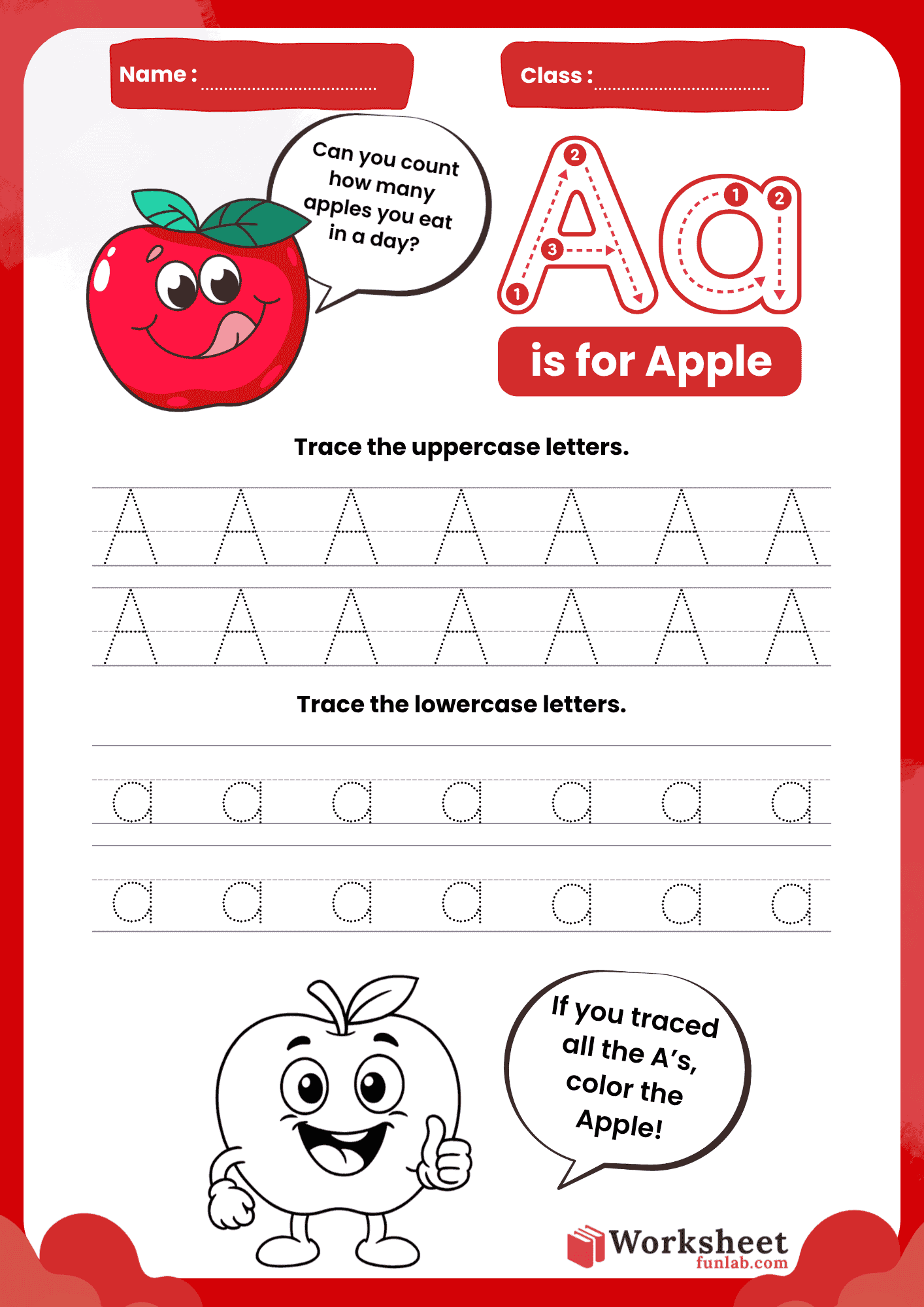
The Letter A Tracing Worksheet is an expertly crafted educational tool designed to introduce young learners to the very first letter of the alphabet. This worksheet is part of a comprehensive preschool workbook series that focuses on foundational literacy skills. Featuring a bright, apple-themed design, it captures a child’s attention immediately.
The layout is intentionally structured to guide a child from visual recognition to physical execution, ensuring that the concept of the letter “A” is reinforced through multiple sensory channels. Whether used in a classroom setting or as part of a homeschooling curriculum, this worksheet provides the perfect balance of instruction and play.
What Kids Will Practice
This worksheet offers a multi-faceted approach to learning. First, children engage in visual recognition by seeing the large, red “A” and “a” at the top, accompanied by a friendly apple character. They will then practice fine motor control through directed tracing.
The worksheet provides specific “stroke paths” (numbered arrows) for both the uppercase “A” and lowercase “a,” teaching children the correct way to form letters from the start. Finally, the page includes a “reward” activity where kids can color a thumbs-up apple character once they have finished their writing practice, which helps build a positive association with academic tasks.
Skills Covered
-
Letter Recognition: Identifying the difference between uppercase “A” and lowercase “a.”
-
Fine Motor Development: Strengthening the small muscles in the hand and wrist through precise tracing.
-
Hand-Eye Coordination: Following dotted lines to create uniform shapes.
-
Phonetic Awareness: Connecting the letter “A” to the “apple” sound through visual cues.
-
Directionality: Learning to write from top-to-bottom and left-to-right following the numbered arrows.
How to Use This Worksheet
This Letter A Tracing Worksheet is best used as a guided activity. Start by pointing to the large apple at the top and asking the child, “What letter does apple start with?” Once they identify the “A,” show them the numbered arrows on the large letters to explain where to start their pencil.
Encourage the child to trace the uppercase letters first, as they are often easier for beginners, before moving on to the more curved lowercase letters.
After the tracing is complete, let the child use crayons or markers to color the apple at the bottom. This transition from “work” to “art” keeps the energy high and prevents the child from feeling overwhelmed.
-
Introduction: Point to the apple and say the letter “A” and its sound.
-
Follow the Path: Look at the numbered arrows on the big letters to see how to move the pencil.
-
Trace: Carefully trace the uppercase “A” rows, then the lowercase “a” rows.
-
Reward: Once the tracing is done, color the happy apple at the bottom of the page!
Perfect For
-
Preschoolers and Toddlers (Ages 3–5) just starting to hold a pencil.
-
Kindergarten students who need extra practice with letter symmetry and sizing.
-
Teachers looking for a high-quality “Letter of the Week” resource.
-
Parents who want to support their child’s early reading readiness at home.
-
Special education settings where visual guides (arrows) are helpful for motor planning.
Why This Worksheet Is Helpful
The Letter A Tracing Worksheet is helpful because it builds “muscle memory.” When a child follows the dotted lines repeatedly, their brain and hand learn the specific movements required to write without assistance. By providing multiple rows of practice, this worksheet ensures the child has enough repetition to gain confidence.
Furthermore, the inclusion of the “Count the apples” and “Color the apple” prompts makes the worksheet feel like a game. This “gamified” learning approach is proven to increase retention in early childhood, making the jump from recognizing a letter to writing it independently much smoother and more successful.


Reviews
There are no reviews yet.